
 Michael Allen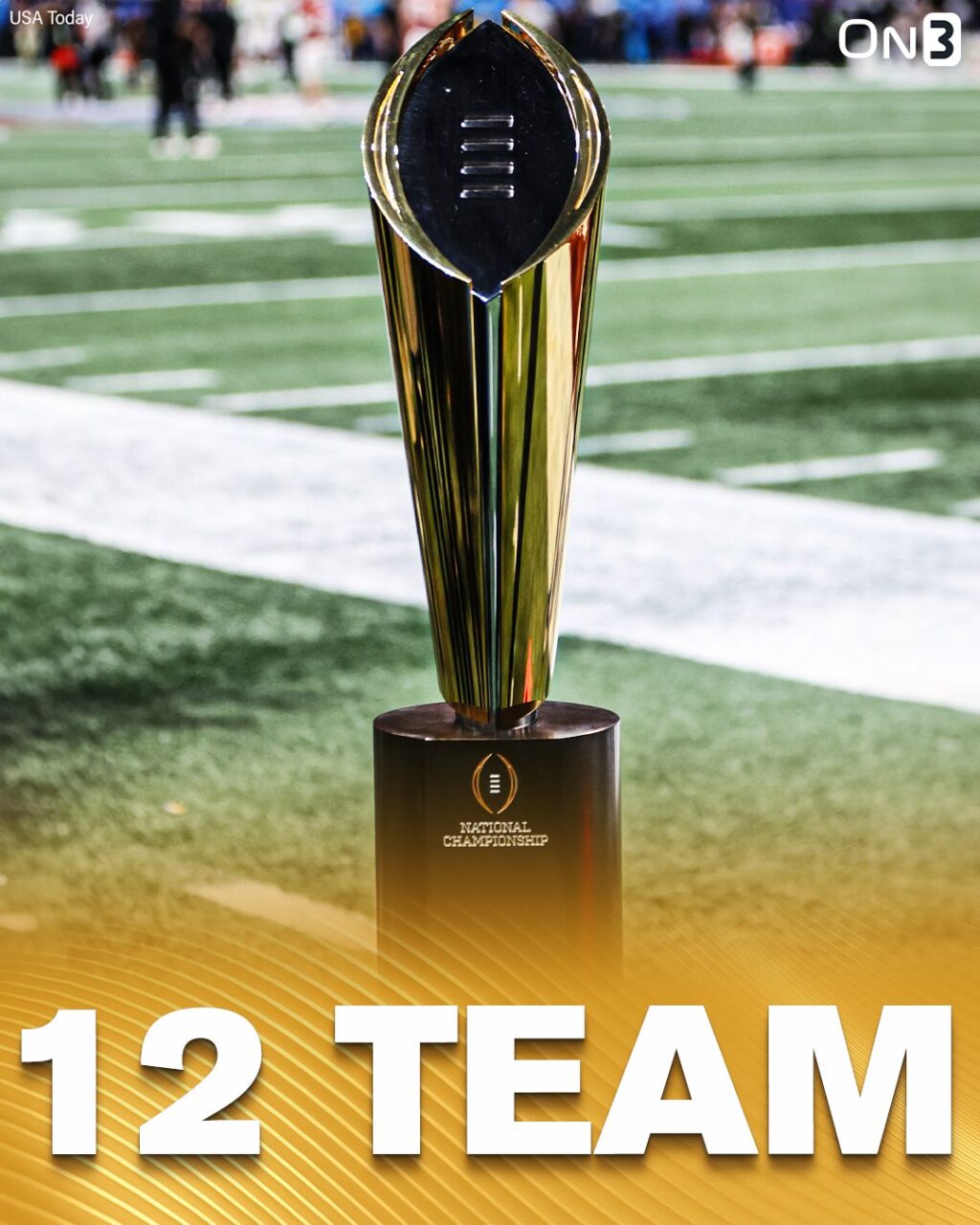
The CFP Committee made the decision to stay at 12 teams in the playoffs for the 2026-2027 season
SEO Meta Description: New CFP guidelines for 2026 reshape automatic bids and effectively guarantee Notre Dame playoff access, reigniting debate over fairness in college football.
⸻
The College Football Playoff (CFP) committee officially released its updated selection guidelines for the 2026 season, and while the changes were designed to address widespread criticism from around the sport, no program appears to benefit more from the new framework than Notre Dame. The Fighting Irish were at the center of postseason controversy this past year after being excluded from the 12-team playoff field, and the ripple effects of that decision have now helped reshape the future of the sport’s postseason structure.
Since the CFP expanded from four teams to 12, criticism of the committee has been constant and often fierce. The expanded field was meant to reduce controversy, provide more access for deserving teams, and limit the number of perceived “snubs.” Instead, it has created new points of tension. This season’s final rankings ignited one of the loudest debates yet when Miami was ranked ahead of Notre Dame, securing the final playoff berth and pushing the Irish out of the field.
The backlash was immediate and widespread. Fans, media members, and former players questioned how Notre Dame could be excluded while Miami earned a spot. Social media erupted, sports talk shows dedicated hours to the debate, and the CFP committee once again found itself defending its selection process. While Miami ultimately silenced many critics by making a run to the national championship game against Indiana—one of the most entertaining title games in recent memory—the anger surrounding the initial selection decision never fully disappeared.
That controversy was compounded by another flashpoint: the decision to include two Group of Five conference champions in the playoff field over the ACC champion. While access for non–Power Four programs has been a major talking point in the playoff expansion era, many observers felt the committee went too far by leaving out a Power Four champion in favor of multiple smaller-conference teams. The combination of these decisions made the 2025 postseason one of the most polarizing in CFP history.
Against that backdrop, the CFP committee moved into discussions about potential expansion beyond 12 teams. Conference leadership, however, could not agree on a path forward. The Big Ten pushed for a dramatic expansion to 24 teams with multiple automatic bids per major conference, a model that would dramatically increase access and revenue but potentially dilute the regular season. The SEC, on the other hand, favored a more conservative expansion to 16 teams, preserving a higher barrier to entry while still broadening the playoff field. With no compromise reached, the CFP elected to keep the playoff at 12 teams for at least one more season and instead adjust the qualification guidelines for 2026.
The new framework is straightforward but impactful. Beginning in 2026, the four Power Four conference champions will receive automatic bids to the playoff. In addition, the highest-ranked conference champion from the Group of Six—which now includes the restructured Pac-12—will also receive an automatic spot. The remaining seven positions in the 12-team field will be filled by at-large selections based on the final CFP rankings. Most notably, Notre Dame will effectively be guaranteed a playoff berth if it finishes inside the committee’s top 12, despite not belonging to a conference and therefore not competing for a conference championship.
To understand the significance of this change, it helps to look at how the most recent playoff field would have differed under the new rules. Using this season’s final rankings as a reference point, the automatic bids would have gone to Georgia, Indiana, Duke, Texas Tech, and Tulane. The at-large spots would have been filled by Ohio State, Oregon, Ole Miss, Texas A&M, Oklahoma, Alabama, and Notre Dame. In this scenario, Duke would have replaced James Madison as an automatic qualifier, and Notre Dame would have taken Miami’s place as an at-large team after finishing inside the top 12.
This hypothetical illustrates why the new guidelines are being viewed as a major win for Notre Dame. As an independent, the Irish do not have to navigate the week-to-week grind of a conference schedule, nor do they face the additional hurdle of a conference championship game to secure an automatic bid. While Power Four programs must win their leagues to lock in a guaranteed spot, Notre Dame can earn its way into the playoff simply by remaining inside the top 12—something that is often achievable with a strong record and favorable perception, even without a conference title on its résumé.
Scheduling flexibility is another major factor in Notre Dame’s advantage. Unlike conference-affiliated programs, the Irish can build their own schedule each season, balancing marquee matchups with more manageable opponents. To the program’s credit, Notre Dame often schedules heavily against Power Four teams and regularly plays 10 such opponents in a given season. However, many of those teams finish with losing records, diminishing the overall difficulty of the slate. Without the risk of being knocked out of automatic qualification by a conference championship loss, Notre Dame’s path to the playoff becomes notably less perilous than that of its conference-bound peers.
The program’s recent decision to end its long-standing rivalry with USC has only intensified scrutiny of its scheduling philosophy. The rivalry had long been a staple of Notre Dame’s schedule and a consistent measuring stick for the program’s competitiveness. Replacing USC with a rotating opponent each season gives Notre Dame even more control over the level of difficulty it faces, further fueling the perception that the new CFP guidelines disproportionately benefit the Irish.
Unsurprisingly, reaction to the updated rules has been mixed. Supporters argue that Notre Dame’s national brand, independent status, and history of drawing significant viewership make it a valuable presence in the playoff. They contend that if the Irish earn a top-12 ranking, they deserve to be included regardless of conference affiliation. Critics, however, see the new guidelines as the CFP caving to pressure from a powerful brand-name program that failed to earn its way into the postseason on the field.
At the heart of the debate is a broader question about fairness and competitive balance. Every Power Four team must survive a conference schedule and, in most cases, win a conference championship to guarantee playoff access. Notre Dame, by contrast, can avoid that extra layer of competition while still enjoying a clear path to the postseason. For many fans and analysts, that discrepancy undermines the idea of a level playing field.
The 2026 changes also highlight a deeper tension within the CFP’s evolution: the constant struggle to balance access, revenue, tradition, and competitive integrity. The playoff was expanded to reduce controversy, yet each new iteration seems to introduce a different set of disputes. With conference realignment reshaping the sport and further expansion looming on the horizon, the Notre Dame question is unlikely to fade anytime soon.
As college football moves toward what feels like an inevitable 16- or even 24-team playoff in the coming years, the treatment of independent programs—particularly Notre Dame—will remain a flashpoint. Whether the Irish continue to benefit from their unique status or are eventually pushed toward conference membership could shape not only their own postseason fortunes, but also the broader direction of the sport.
About The Author